My adventure first took off at Gatwick Airport, before I landed at Shanghai Pudong eleven hours later. After two trains and a long series of messages on WeChat, I was warmly greeted by my host family on floor 5A of the labyrinthine car park of Hangzhoudong station. I was straight in the deep end. I sat in the car, uttering fragments of conversation from a UK-timed brain that was convinced it was 4am, thinking up the best things to say to get to know two Chinese ten-year-olds (Nemo and his best friend Jessie).
Yet, the next morning, there was no time to worry, think, or be tired. The day started with some delicious new foods, followed by a trip to the climbing wall, more new food, a few hours of teaching English, a trip to an art gallery, dinner, and bed. The following seven days followed a similar structure. I was immersed. Almost all my waking minutes were spent with this family – eating their food, joining their activities. My main duty was to be teacher (lǎoshī) of English and turn Nemo and Jessie into top students (xué bà)! It was a joy, and sometimes a struggle, but nonetheless rewarding to see Nemo and Jessies’ confidence in English grow. They were both very skilled, with a level of spoken English comparable to a native speaker of similar age. Over time, our bond grew. We spent our study breaks playing ‘wǒ shì wénzi’ (I am a mosquito). This consisted of running away from the wénzi – a scuttling Brit with flapping arms and gnashing teeth (me)!
Despite the Mandarin Pinyin sprinkled in this blog, my ability to speak the language was extremely limited, and this was a barrier that remained for my whole time in China. At times, I felt like a fly on the wall. However, it was in these moments that I had the space to drift into a state of observing my environment, occasionally brought to attention by the words lǎoshī (teacher) or Yīngguó (England). Yet the pockets of more thorough conversation I had with Peter and Ling (the host family parents) were the most insightful. I learnt about Peter’s entrepreneurial attitude and his upbringing in Ningbo. I learnt from Ling about her view of an education system that necessitated her making her son study so hard, despite wishing really for him to simply be a child and play. It was in these moments I learnt of the differences and the similarities between us – some shaped by individual proclivities, some cultural. I was inspired by the value they placed on time with family, alongside their pride for their region, hometowns, and even the provenance of food. It was eye-opening to experience another culture firsthand.
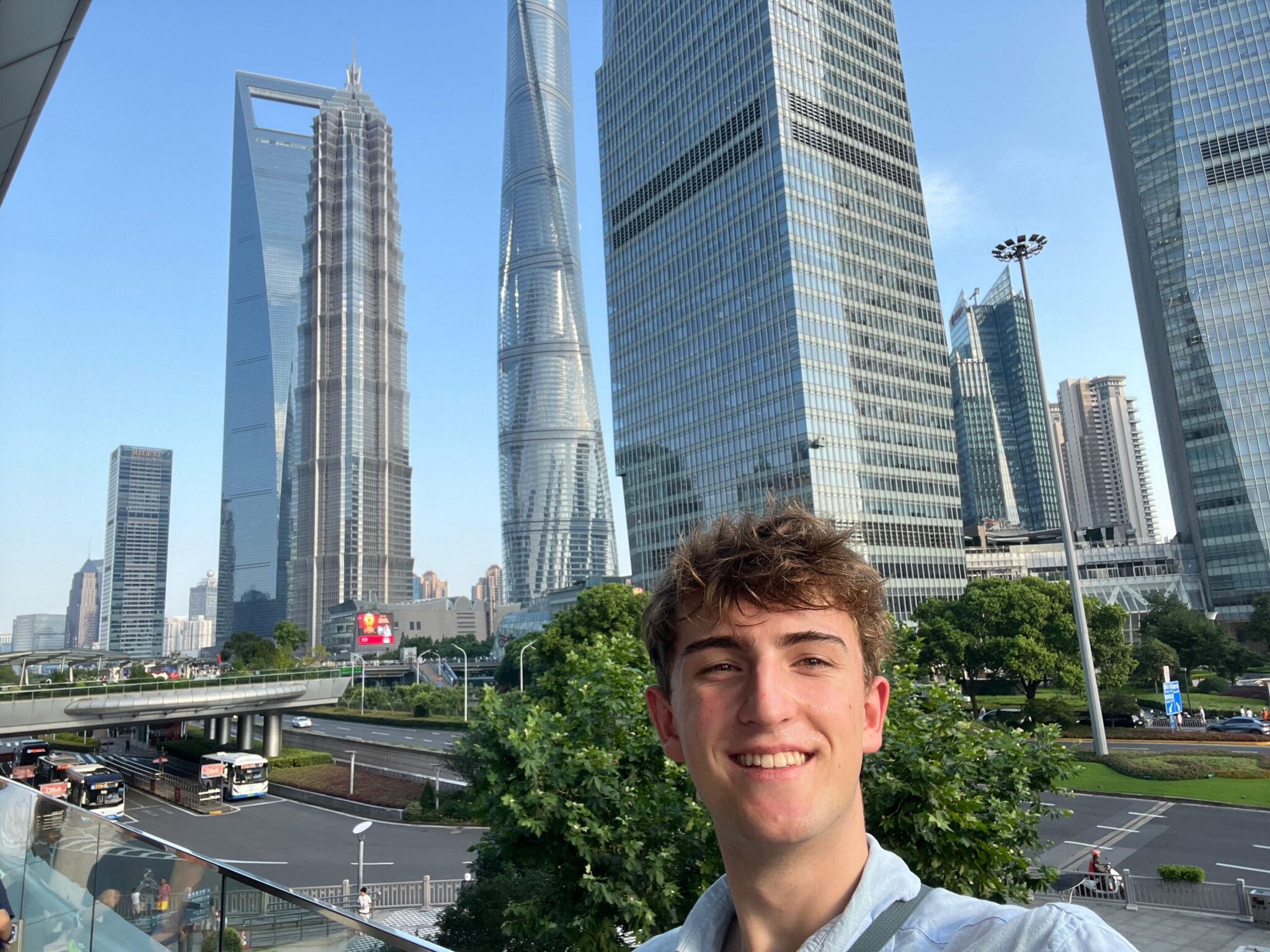
It was tough to say goodbye to the family. Just as I had settled into daily life in Hangzhou, I was leaving for the second part of my adventure. I got the train to Shanghai. I lugged my suitcase up the subway stairs, before stepping out of the metro station onto East Nanjing Road. The crowds swept past and I felt as if I was roasting, with a ‘feels like’ temperature of forty degrees outside. Yet the street had an alluring buzz that I had not been exposed to in Hangzhou. Shanghai contrasted with my time with the family in many other ways too. Merely a tourist, I had to devise my own itinerary, without local experts to cut straight through to the best local places, foods and activities. Fondly termed ‘metro roulette’, I found that picking a completely random metro stop to get off at was the best way to explore. A favourite activity of mine became using the cheap rental bikes to cycle around the city’s endless roads. This proved a rigorous exercise in hazard perception. I dodged the ubiquitous Meituan (Uber Eats equivalent) drivers on mopeds, who mounted pavements and ran reds to meet tight delivery deadlines. Off the bikes, I had a wonderful and wide-ranging experience. Watching the Bund light up at night, partying with locals at INS Land, eating xiaolongbao, and haggling for flip-flops at an underground market left me with fond memories. Spending so much time alone, I learnt about myself – noticing what made me tick in Shanghai that didn’t in Hangzhou, and vice versa.
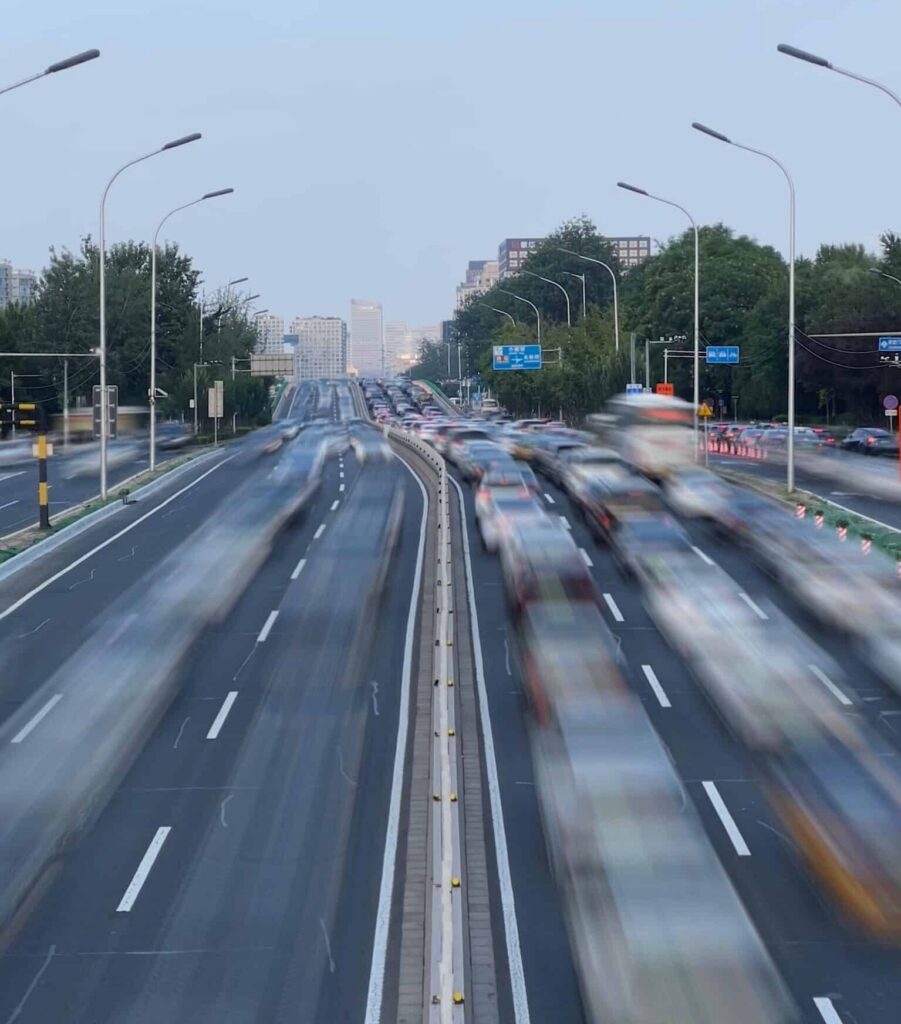
The next stop was Beijing. It had a different feel – perhaps more historic and less cosmopolitan. I kept playing ‘metro roulette’, seeing much of the city this way. As a history student, I enjoyed touring Tiananmen Square, the Forbidden City, and a propaganda poster museum. I was glad to experience China’s passion for music, attending an orchestra concert, as well as doing Zumba-style dancing in the public squares of Beijing’s Olympic Park in the cooler evenings. There appeared to be real ethos for communal exercise, with local parks acting as a ‘third space’ for Beijing’s more senior population. Another highlight was speaking with a Pembroke alumnus named Matthew, who kindly agreed to meet with me to talk about his work in the British Embassy in Beijing. I got the impression of a job that is a combination of challenging and impactful, with a pragmatic attitude behind much of the work of the diplomatic service; this certainly appealed to my idea of what a meaningful career could be.
With that, my adventure came to its conclusion. My eighteen days in China were some of the most enriching of my life so far. There were moments of joy and connection, but also exhaustion and loneliness. I would have had it no other way; I was meaningfully immersed. I reminded myself of the value and ‘everywhereness’ of potential human connection. I learnt to be comfortable and calm in uncertainty, and the value in throwing myself straight into the deep end.
I extend my heartfelt thanks to the LEAP programme for making this possible. I could not have embarked on this adventure without them. The programme as a whole has been a privilege to be a part of and very helpful.