The Adventure That Started With Something to Say
After attending the LEAP introduction session, I felt incredibly inspired when hearing the previous cohort talk about their adventures. The risks they’d taken and the things they’d learned about themselves along the way. I was excited at the prospect from the outset, but also genuinely nervous about how to make my own adventure meaningful. I wanted something that would push both my academic thinking and my personal development in equal measure.
Through mentorship and discussion with the LEAP team, I realised my interests lay at the intersection of education and social change; not just studying inequality, but trying to understand, and eventually help disrupt, the systems that produce it. Through LEAP’s public speaking sessions, I discovered something I hadn’t quite expected. That the thing I loved most was also the thing that frightened me most. Public speaking had always felt like an act of exposure, but it was also, I realised, the most direct way I could translate years of research and lived experience into something that might matter to someone else. So, I started networking (something completely out of my comfort zone and unknown to me) and after many ups and downs I reached out to academics whose work intersected with mine. I pitched my research presentation over teams and secured the opportunity to deliver my full presentation at the University of British Columbia.
I won’t pretend I wasn’t nervous. The academics I presented to held doctorates in fields I had studied but not yet devoted a life to, and for a moment I felt every inch the imposter, a second-year undergraduate in a room built for people with far more letters after their names. It hardly seemed possible that I’d soon be standing in front of academics at UBC Press, several of whom had spent entire careers thinking about the very questions I’d only begun to ask. But somewhere in that anxiety, I found a steadier thought. No one else in that room had my perspective. Not because I was uniquely brilliant, but because perspective, by its nature, cannot be borrowed. It has to be lived.
My presentation, “Education’s Hidden Curriculum: Who Gets to Look Brilliant?”, drew on my own experience growing up in a part of the UK with strikingly low access to higher education, and the sometimes-disorienting process of learning to navigate the unspoken rules of a place like Cambridge. Rules no one had written down for me, that I had to learn by watching, absorbing, occasionally getting wrong. However, after reflecting on my own experiencing, I began to ask if issues surrounding institutional fluency can limit opportunity from my own privilege as a white British student, what must it look like across different intersections. Leading me into research on Indigenous experiences of education, and the deeper, structurally distinct forms of exclusion that colonial history has produced. These are not equivalent stories, and I was careful throughout not to treat them as such. But tracing the underlying grammar (the way recognition so often gets mistaken for merit) across different contexts opened a much larger and more urgent question about how institutional fluency compounds across intersecting forms of disadvantage.
The discussion that followed was, one of the more meaningful academic experiences of my degree so far. The feedback was generous, rigorous, and genuinely expansive. The kind that doesn’t just validate an idea but reshapes it. There was conversation about the possibility to extend this research further, and this affirmed something in me that further academic study and life is a direction I want to strive to pursue in my future. The academics at UBC Press were extraordinarily kind afterward, giving me a tour of the press and sending me home with an armful of books I would later have to creatively negotiate into my suitcase.
Everything Else Was the Education Around the Education
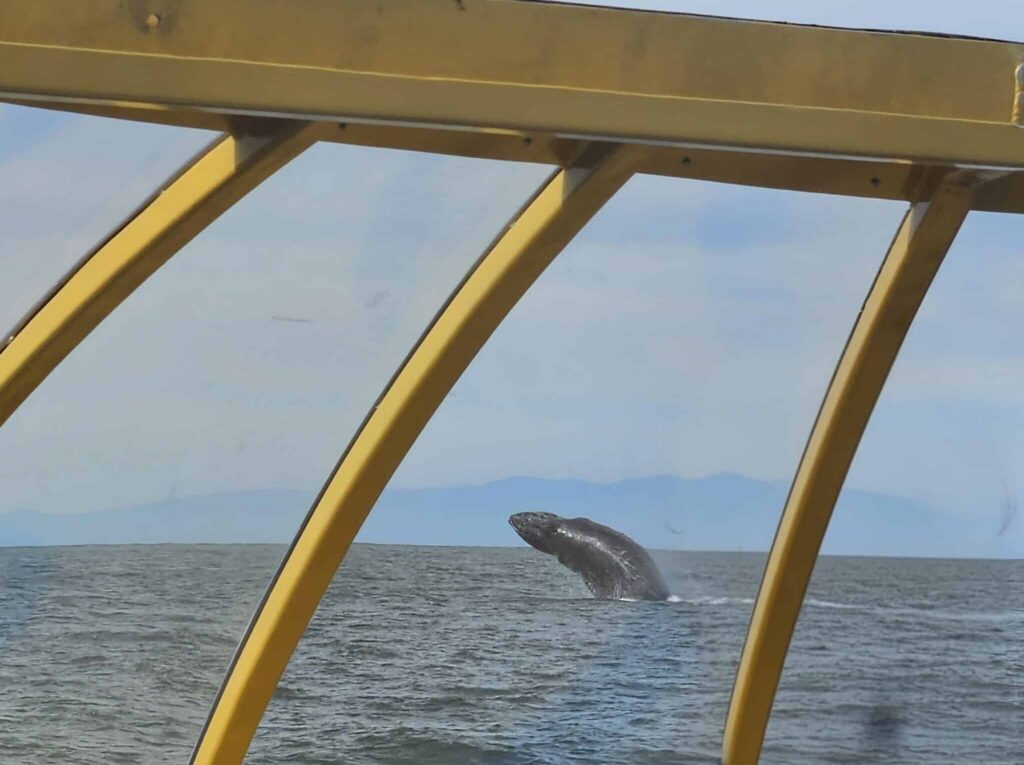
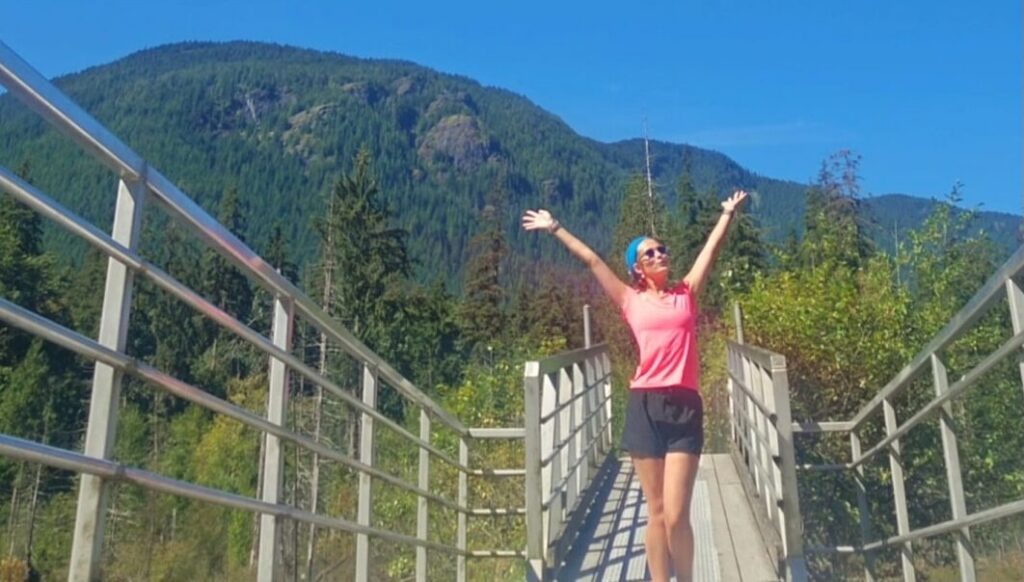
Between the emails and the presentation, itself, Vancouver gave me an entirely different kind of learning. After several years of chronic illness, I had lost a lot of confidence in my ability and independence. Through the support of LEAP and the ability to take calculated risk, I was able to set physical challenges that instilled faith in myself that I had lost. This included a 2,000m mountain ascent that left me looking considerably less composed than the day-trippers who’d taken the cable car up. I swam in an ice-cold forest pool. Hiked on trails for miles. I also walked the seawall at Stanley Park and spent hours in museums whose exhibitions on Indigenous history and culture fed directly back into my thinking, sharpening the presentation before I’d even delivered it. I spent five hours on a boat watching whales, chosen deliberately for its ethical, low-impact approach (this truly was the memory of the lifetime). I met an 80-year-old man who soon became a hiking companion as our conversation revealed he still cycles an hour to work each day as a practising psychologist. I met a fellow Cornish woman (a teacher) on a shuttle bus and talked for hours about the cultural nature of rural Cornwall, education and identity before either of us thought to exchange names.
None of it was separate from the academic work, really. The city, the landscape, the conversations with strangers. All of it fed into the same project of understanding how place, culture, and structure shape a person’s sense of what’s possible for them.
What I took home:
I came home with a fuller understanding of my own research, a clearer sense of where I want to take it next, and a quiet confidence that hadn’t quite been there before. I went into this as a second-year undergraduate; I return to Cambridge for my third year with plans for my professional and academic future I feel genuinely excited about. None of this would have happened without the LEAP Programme, whose support: practical, financial, and personal turned an idea into something real. To the LEAP team and everyone who shaped this experience I am so grateful. I cannot express enough thanks for what has been the adventure of a lifetime!